
7 Things to Consider Before Designing an Outdoor Kitchen
Last Updated on September 16, 2026 by Janell
An outdoor kitchen can make your backyard much more useful, especially if you like grilling and entertaining. But picking out a grill, countertops, and cabinets is only part of the planning process.
You also need to think about how you will actually use the space. Where will you prep the food? Can someone get to the refrigerator without walking right past a hot grill? Is there enough room for people to move around without getting in the way of the person cooking?
Thinking through these details before you build can give you an outdoor kitchen that is easier and safer to use.
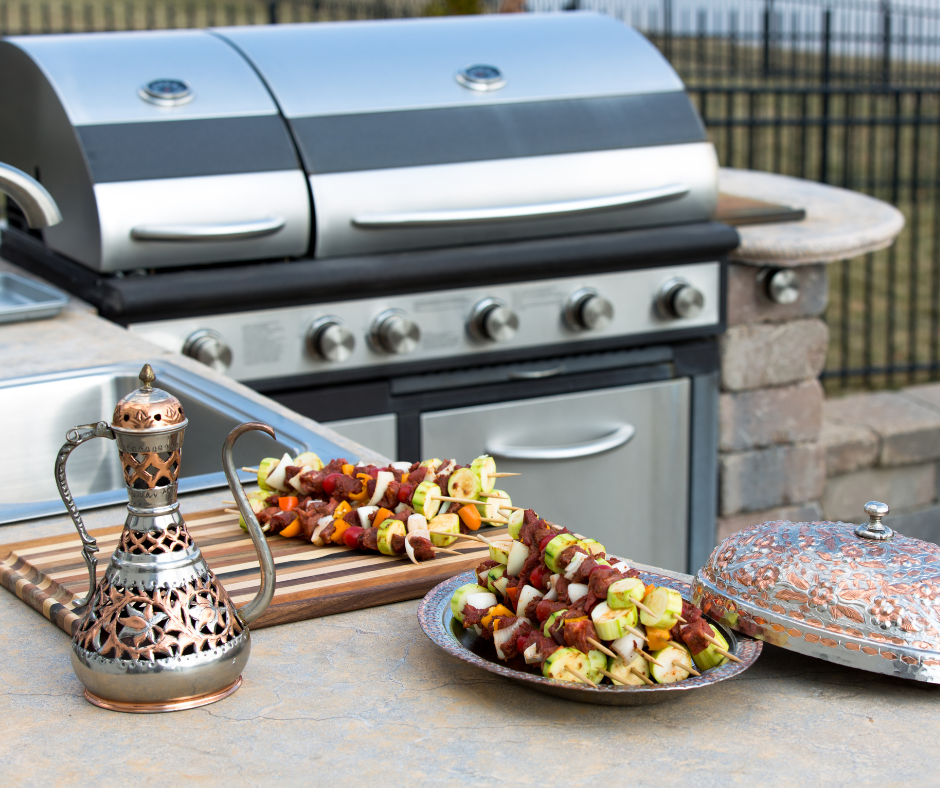
Start With Safe Grill Placement
The grill will probably be the center of your outdoor kitchen, so start there when planning the layout.
Don't squeeze a grill into a small space just because it looks best there. It needs enough clearance from your home, railings, furniture, overhangs, and anything else that could be damaged by heat or catch fire.
The National Fire Protection Association recommends keeping grills well away from the house and deck railings and out from under eaves and overhanging branches. It also recommends keeping children and pets at least three feet away from the grilling area.
If you are installing Gas grills, follow the manufacturer's instructions for placement, ventilation, hookups, and required clearances. These details can vary by grill, so include them in the planning process rather than figuring them out after the kitchen is built.
Ventilation is very important if your outdoor kitchen is under a roof or partially enclosed. Smoke and heat need somewhere to escape instead of collecting around the cooking area.
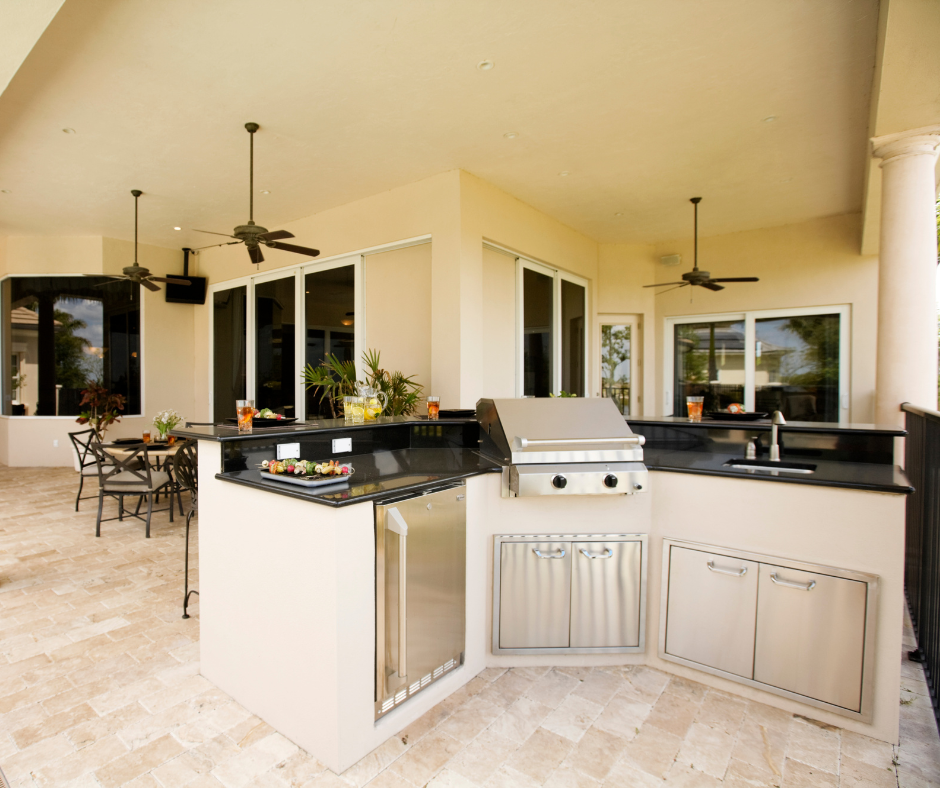
Plan the Kitchen Around How You Cook
Think about what happens from the moment you bring food outside until you sit down to eat.
Ideally, you should have some counter space close to the grill for prepping food, holding utensils, and setting down finished dishes. A refrigerator or cooler should also be easy to reach without requiring you to walk through the main cooking area over and over again.
One simple way to test your layout is to imagine making dinner. Where would you put a tray of raw chicken? Where would you set the cooked food? Where are the plates? Where would you wash your hands?
Those small details can make a big difference once you start using the space regularly.
This is also a good place to think about the rest of the backyard. Your outdoor kitchen doesn't have to be completely separate from your dining and seating areas. A well-planned layout can help everything work together. Your guide to creating a comfortable, cohesive outdoor living space has more ideas for planning furniture, traffic flow, materials, and seating.
Add Storage Where You Need It
Outdoor cabinets and drawers can save you many trips back into the house.
Think about the things you use every time you grill, such as tongs, spatulas, foil, serving trays, paper towels, and cleaning supplies. Those should be the easiest to reach.
Items you use only occasionally can go in cabinets farther from your main work area.
Make sure the storage you choose is made for outdoor use. Even a covered kitchen can be exposed to humidity, moisture, dirt, and temperature changes.
Leave Room for People to Walk
An outdoor kitchen often becomes a gathering spot. Unfortunately, that can also mean everyone ends up standing exactly where the cook needs to be.
Try to keep the main walkway away from the grill and food prep area. Someone heading to the table, refrigerator, backyard, or house shouldn't have to squeeze behind the person working at a hot grill.
This becomes even more important if you have bar seating around the kitchen. Leave enough room behind the stools for someone to sit while other people can still walk past.
Flooring matters too. Outdoor surfaces can become slick from rain, spills, grease, and cleaning. Look for outdoor flooring that provides good traction and drains water instead of letting it collect around the kitchen.
Don't Forget Good Lighting
If you plan to use your outdoor kitchen for dinner, don't make lighting an afterthought.
A bright light over the grill and food-prep area makes it much easier to see what you are cooking. You can then use softer lighting around dining and seating areas.
Walkways, steps, and changes in elevation should also be easy to see after dark.
Also think about where the switches are located. You don't want to walk through a dark kitchen just to find the light switch. Putting controls near the entrance to the outdoor area makes much more sense.
Make Cleaning and Maintenance Easy
Outdoor kitchens get dirty. Grease splatters, food spills, pollen, dust, rain, and insects are all part of having an outdoor kitchen.
Choosing surfaces that are easy to wipe down will make regular cleaning much less frustrating. The same goes for cabinets, flooring, and appliances.
Your grill also needs routine attention. The Consumer Product Safety Commission recommends checking gas grill hoses for cracking, brittleness, holes, and leaks and keeping hoses away from hot surfaces and grease. (U.S. Consumer Product Safety Commission)
Don't build cabinets or counters in a way that makes important connections impossible to reach. You may eventually need access to gas lines, electrical connections, plumbing, drainage, or the back of an appliance.
Think About Food Safety
Kitchen design can even make food preparation safer.
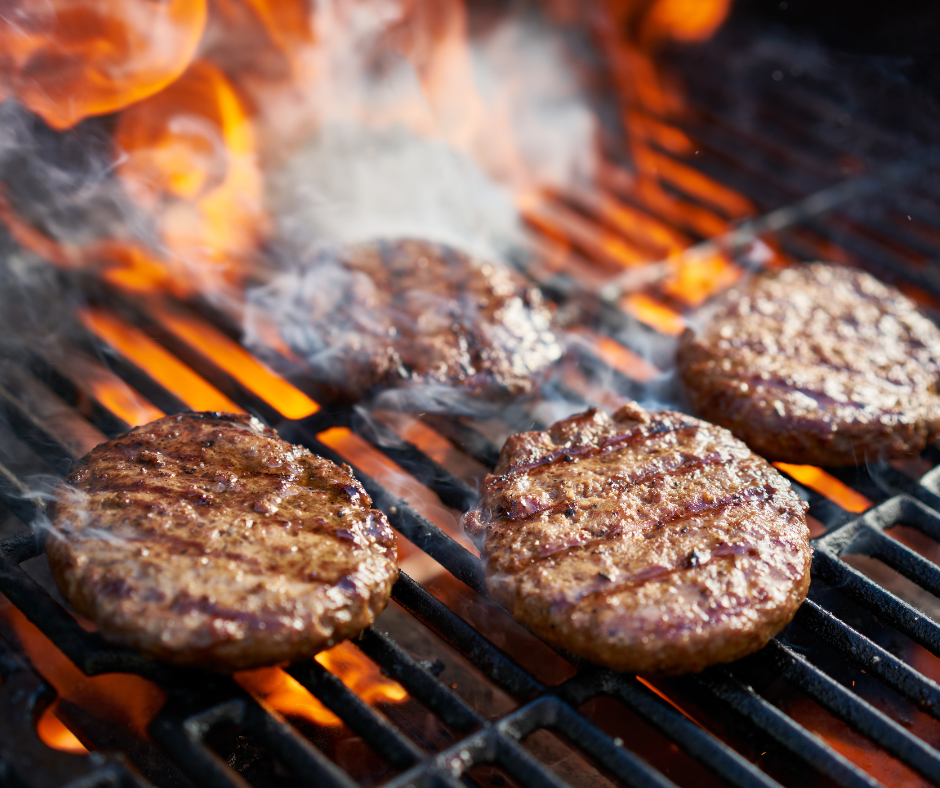
Having enough workspace makes it easier to keep raw meat separate from cooked food. If possible, set up a designated prep area and keep a sink nearby to wash your hands and utensils.
The USDA recommends using separate platters and utensils for raw and cooked meats and checking grilled foods with a food thermometer instead of relying on how browned the outside looks. (Food Safety and Inspection Service)
That may seem like a small detail when you are designing the kitchen, but having enough counter and storage space makes these habits much easier.
Create an Outdoor Kitchen You'll Actually Use
A beautiful outdoor kitchen isn't very useful if the layout makes cooking difficult.
Start with your grill and work outward. Give yourself enough room to prep food, store what you use most, move around comfortably, and clean up when dinner is over. Also think about where your family and guests will sit and how they will move through the space.
A little planning in the beginning can help you create an outdoor kitchen that works just as well for a quick weeknight dinner as it does when you have friends and family over.